Real-world challenges
Interactive software that has to work with custom input devices, physical game boards, low-end tablets, poor connectivity — or hardware from before the smartphone.
Some projects demand more than getting the software right. They require understanding how people interact with physical objects, how devices behave in the field, and how to make everything work together reliably. From early location-based experiences to augmented reality and specialised hardware integrations, I’ve worked across the boundary between software and the real world — building robust systems that perform well under real-world constraints, while keeping the experience itself front and centre.
Selected work
Augmented reality · Physical game board
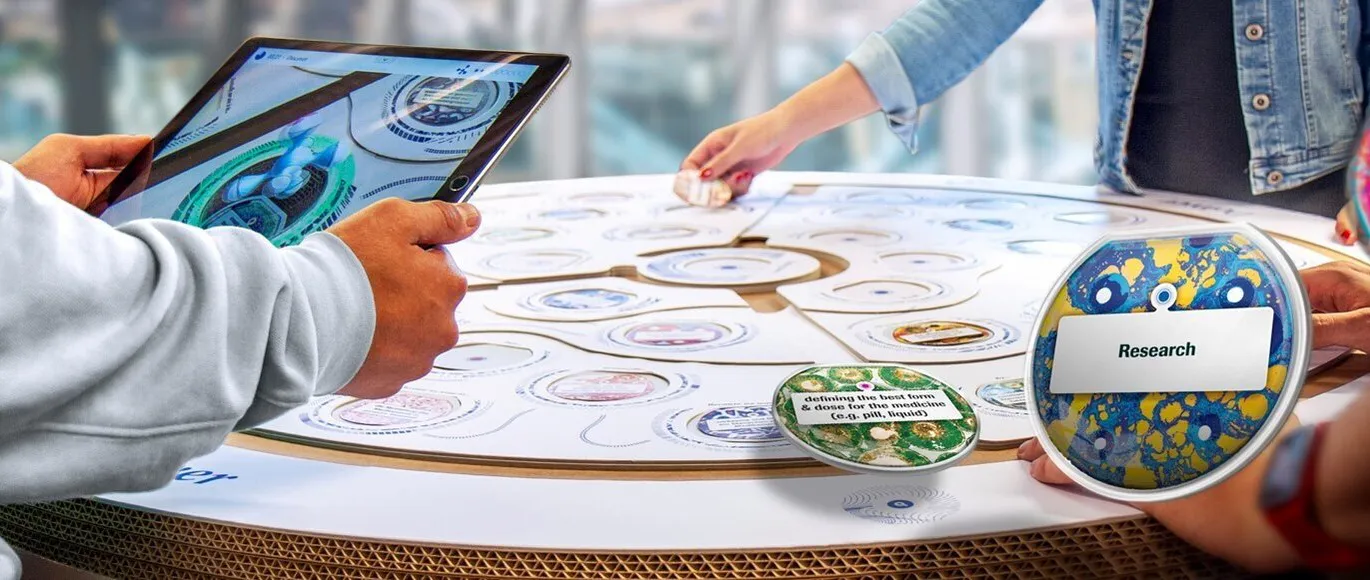
An augmented-reality board game for Roche
A tablet brings a physical board game to life: augmented reality is central to the gameplay, so the software has to cope with tracking, lighting, different table setups and players moving around the board.
I designed the software architecture, led the technical team, built the implementation and integrated it on site.
Low-end devices · Performance · Scalable codebase
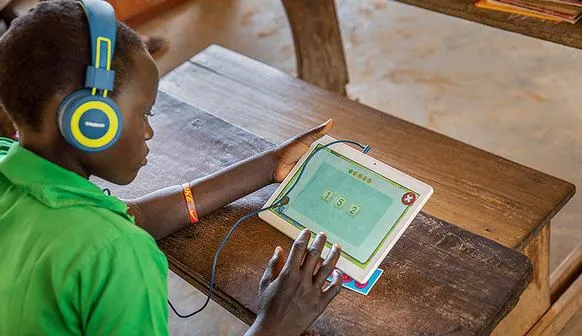
An educational game for children in conflict-affected areas
Can’t Wait To Learn teaches children reading and maths through games, in places where regular schooling has been disrupted by conflict.
I worked on several major overhauls of the existing game world, adding minigames and an onboarding module while improving performance and reducing the application size. I also made the codebase more scalable and added automated tests, simplifying the process of adapting the game to new countries and their curricula, where reliable performance and efficient deployment are essential.
Custom input device · Sensor data analysis
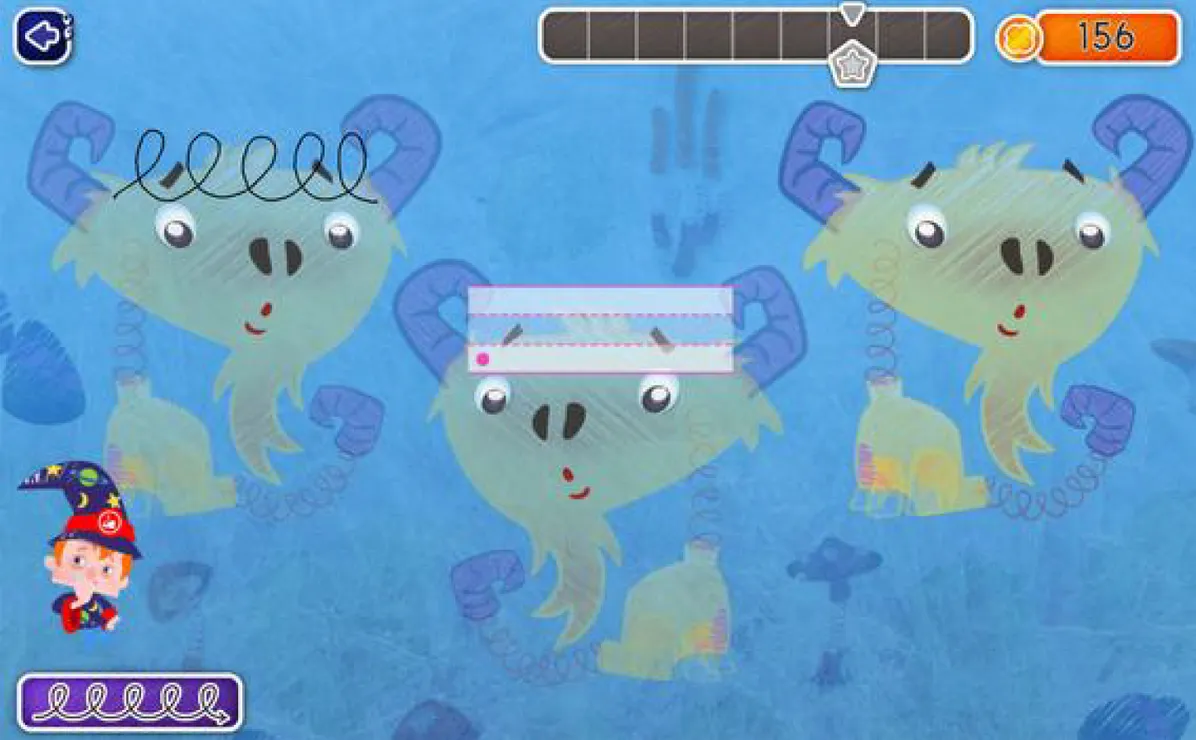
A tablet game played with a special pen
MonsterZoo helps children develop the fine motor skills needed for writing, using a specialised pen developed by STABILO as the game’s input device.
I developed the complete game based on an earlier desktop prototype, working closely with the pen’s engineers to integrate its raw input data on iOS and Android. The core challenge was processing the pen’s data — analysing movement trajectories, pressure and timing — and translating it into meaningful assessments of children’s fine motor skills, while keeping the rich visual experience responsive on lower-end tablets.

Raw GPS · Limited hardware · Unreliable connectivity
Location-based storytelling, before the smartphone
Codex Kodanski told a story through the streets of Rotterdam, using handheld computers connected to separate GPS receivers — in 2004, years before smartphones made location-based experiences commonplace. I developed the complete experience, including a content management system for authoring the story (with support from V2_ in the lower-level technical work).
The technical challenges included processing unreliable raw GPS data, calibrating maps before the days of readily available online mapping, and working within the devices’ limited processing power and battery life. Another challenge was keeping a live connection between players exploring the city and a museum installation, where visitors could follow their journeys and see and hear what the players were experiencing, despite unreliable connectivity.